
- ML - Home
- ML - Introduction
- ML - Getting Started
- ML - Basic Concepts
- ML - Ecosystem
- ML - Python Libraries
- ML - Applications
- ML - Life Cycle
- ML - Required Skills
- ML - Implementation
- ML - Challenges & Common Issues
- ML - Limitations
- ML - Reallife Examples
- ML - Data Structure
- ML - Mathematics
- ML - Artificial Intelligence
- ML - Neural Networks
- ML - Deep Learning
- ML - Getting Datasets
- ML - Categorical Data
- ML - Data Loading
- ML - Data Understanding
- ML - Data Preparation
- ML - Models
- ML - Supervised Learning
- ML - Unsupervised Learning
- ML - Semi-supervised Learning
- ML - Reinforcement Learning
- ML - Supervised vs. Unsupervised
- Machine Learning Data Visualization
- ML - Data Visualization
- ML - Histograms
- ML - Density Plots
- ML - Box and Whisker Plots
- ML - Correlation Matrix Plots
- ML - Scatter Matrix Plots
- Statistics for Machine Learning
- ML - Statistics
- ML - Mean, Median, Mode
- ML - Standard Deviation
- ML - Percentiles
- ML - Data Distribution
- ML - Skewness and Kurtosis
- ML - Bias and Variance
- ML - Hypothesis
- Regression Analysis In ML
- ML - Regression Analysis
- ML - Linear Regression
- ML - Simple Linear Regression
- ML - Multiple Linear Regression
- ML - Polynomial Regression
- Classification Algorithms In ML
- ML - Classification Algorithms
- ML - Logistic Regression
- ML - K-Nearest Neighbors (KNN)
- ML - Naïve Bayes Algorithm
- ML - Decision Tree Algorithm
- ML - Support Vector Machine
- ML - Random Forest
- ML - Confusion Matrix
- ML - Stochastic Gradient Descent
- Clustering Algorithms In ML
- ML - Clustering Algorithms
- ML - Centroid-Based Clustering
- ML - K-Means Clustering
- ML - K-Medoids Clustering
- ML - Mean-Shift Clustering
- ML - Hierarchical Clustering
- ML - Density-Based Clustering
- ML - DBSCAN Clustering
- ML - OPTICS Clustering
- ML - HDBSCAN Clustering
- ML - BIRCH Clustering
- ML - Affinity Propagation
- ML - Distribution-Based Clustering
- ML - Agglomerative Clustering
- Dimensionality Reduction In ML
- ML - Dimensionality Reduction
- ML - Feature Selection
- ML - Feature Extraction
- ML - Backward Elimination
- ML - Forward Feature Construction
- ML - High Correlation Filter
- ML - Low Variance Filter
- ML - Missing Values Ratio
- ML - Principal Component Analysis
- Reinforcement Learning
- ML - Reinforcement Learning Algorithms
- ML - Exploitation & Exploration
- ML - Q-Learning
- ML - REINFORCE Algorithm
- ML - SARSA Reinforcement Learning
- ML - Actor-critic Method
- ML - Monte Carlo Methods
- ML - Temporal Difference
- Deep Reinforcement Learning
- ML - Deep Reinforcement Learning
- ML - Deep Reinforcement Learning Algorithms
- ML - Deep Q-Networks
- ML - Deep Deterministic Policy Gradient
- ML - Trust Region Methods
- Quantum Machine Learning
- ML - Quantum Machine Learning
- ML - Quantum Machine Learning with Python
- Machine Learning Miscellaneous
- ML - Performance Metrics
- ML - Automatic Workflows
- ML - Boost Model Performance
- ML - Gradient Boosting
- ML - Bootstrap Aggregation (Bagging)
- ML - Cross Validation
- ML - AUC-ROC Curve
- ML - Grid Search
- ML - Data Scaling
- ML - Train and Test
- ML - Association Rules
- ML - Apriori Algorithm
- ML - Gaussian Discriminant Analysis
- ML - Cost Function
- ML - Bayes Theorem
- ML - Precision and Recall
- ML - Adversarial
- ML - Stacking
- ML - Epoch
- ML - Perceptron
- ML - Regularization
- ML - Overfitting
- ML - P-value
- ML - Entropy
- ML - MLOps
- ML - Data Leakage
- ML - Monetizing Machine Learning
- ML - Types of Data
- Machine Learning - Resources
- ML - Quick Guide
- ML - Cheatsheet
- ML - Interview Questions
- ML - Useful Resources
- ML - Discussion
Machine Learning (ML) Tutorial
This Machine Learning (ML) tutorial will provide a detailed understanding of the concepts of machine learning such as, different types of machine learning algorithms, types, applications, libraries used in ML, and real-life examples.
What is Machine Learning
Machine Learning (ML) is a branch of Artificial Intelligence (AI) that works on algorithm developments and statistical models that allow computers to learn from data and make predictions or decisions without being explicitly programmed.
This Machine Learning With Python Tutorial is based on the Latest Python 3.14.2 versions.
Online Editor
We have provided an Online Python Compiler/Interpreter. Which helps you to Edit and Execute the Python code directly from your browser. You can also execute the Python programs using this.
Try to click the icon  to run the following Python code to handle categorical data in machine learning.
import pandas as pd

# Creating a sample dataset with a categorical variable
data = {'color': ['red', 'green', 'blue', 'red', 'green']}
df = pd.DataFrame(data)

# Performing one-hot encoding
one_hot_encoded = pd.get_dummies(df['color'], prefix='color')

# Combining the encoded data with the original data
df = pd.concat([df, one_hot_encoded], axis=1)

# Drop the original categorical variable
df = df.drop('color', axis=1)

# Print the encoded data
print(df)
How does Machine Learning Work?
Machine Learning process includes Project Setup, Data Preparation, Modeling and Deployment. The following figure demonstrates the common working process of Machine Learning. It follows some set of steps to do the task; a sequential process of its workflow is as follows −
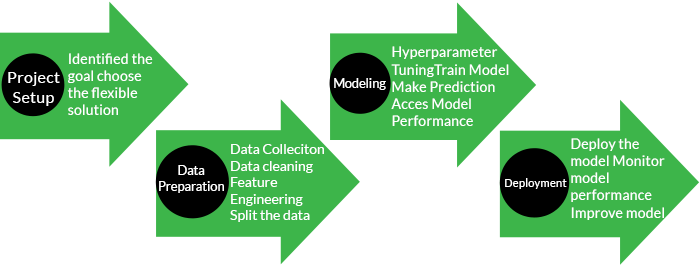
Stages of Machine Learning
The following are the stages (detailed sequential process) of Machine Learning:
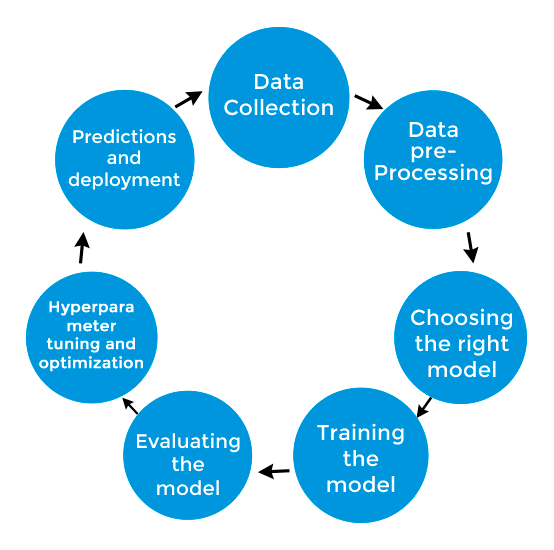
Data Collection − Data collection is an initial step in the process of machine learning. In this stage, it collects data from the different sources such as databases, text files, pictures, sound files, or web scraping. This process organizes the data in an appropriate format, such as a CSV file or database, and makes sure that they are useful for solving your problem.
Data Pre-processing − It is a key step in the process of machine learning, which involves deleting duplicate data, fixing errors, managing missing data either by eliminating or filling it in, and adjusting and formatting the data.
Choosing the Right Model − The next step is to select a machine learning model; once data is prepared, then we apply it to ML models like linear regression, decision trees, and neural networks that may be selected to implement. This selection depends on many factors, such as the kind of data and your problem, the size and type of data, the complexity, and the computational resources.
Training the Model − This step includes training the model from the data so it can make better predictions.
Evaluating the model − When module is trained, the model has to be tested on new data that they haven't been able to see during training.
Hyperparameter Tuning and Optimization − After evaluating the model, you may need to adjust its hyperparameters to make it more efficient. You should try different combinations of parameters and cross-validation to ensure that the model performs well on different data sets.
Predictions and Deployment − When the model has been programmed and optimized, it will be ready to estimate new data. This is done by adding new data to the model and using its output for decision-making or other analysis. The deployment includes its integration into a production environment to make it capable of processing real-world data.
Types of Machine Learning
Machine learning models fall into the following categories −
1. Supervised Machine Learning − It is a type of machine learning that trains the model using labeled datasets to predict outcomes.
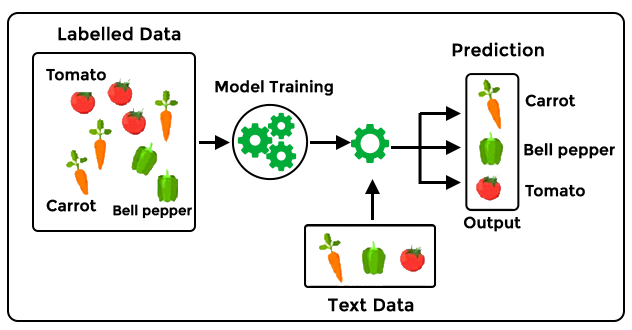
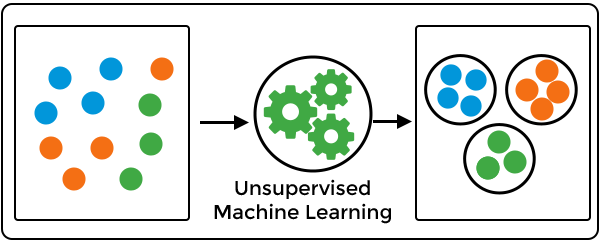
2. Unsupervised Machine Learning − It is a type of machine learning that learns patterns and structures within the data without human supervision.
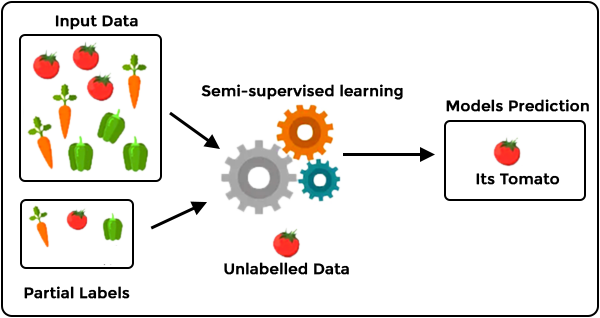
3. Semi-supervised Learning − It is a type of machine learning that is neither fully supervised nor fully unsupervised. The semi-supervised learning algorithms basically fall between supervised and unsupervised learning methods.
4. Reinforcement Machine Learning − It is a type of machine learning model that is similar to supervised learning but does not use sample data to train the algorithm. This model learns by trial and error.

Common Machine Learning Algorithms
Several machine learning algorithms are commonly used. These include:
- Neural Networks − It works like the human brain with many connected nodes. They help to find patterns and are used in language processing, image and speech recognition, and creating images.
- Linear Regression − It predicts numbers based on past data. For example, it helps estimate house prices in an area.
- Logistic Regression − It predicts like "yes/no" answers and it is useful for spam detection and quality control.
- Clustering − It is used to group similar data without instructions and it helps to find patterns that humans might miss.
- Decision Trees − They help to classify data and predict numbers using a tree-like structure. They are easy to check and understand.
- Random forests − They combine multiple decision trees to improve predictions.
Importance of Machine Learning
Machine Learning is important in automation, extracting insights from data, and decision-making processes. It has its significance due to the following reasons:
- Data Processing − Machine learning is useful to analyze large data from social media, sensors, and other sources and help to reveal patterns and insights to improve decision-making.
- Data-Driven Insights − Machine learning algorithms find trends and connections in big data that humans might miss, which helps to take better decisions and predictions.
- Automation − Machine learning automates the repetitive tasks, reducing errors and saving time.
- Personalization − Machine learning is useful to analyze the user preferences to provide personalized recommendations in e-commerce, social media, and streaming services. It helps in many manners, such as to improve user engagement, etc.
- Predictive Analytics − Machine learning models use past data to predict future outcomes, which may help for sales forecasts, risk management, and demand planning.
- Pattern Recognition − Machine learning is useful in pattern recognition during image processing, speech recognition, and natural language processing.
- Finance − Machine learning is used in credit scoring, fraud detection, and algorithmic trading.
- Retail − Machine learning helps to enhance the recommendation systems, supply chain management, and customer service.
- Fraud Detection & Cybersecurity − Machine learning detects the fraudulent transactions and security threats in real time.
- Continuous Improvement − Machine learning models update regularly with new data, which allows them to adapt and improve over time.
Applications of Machine Learning
Machine learning is used in various fields. Some of the most common applications include:
- Speech Recognition − Machine learning is used to convert spoken language into text using natural language processing (NLP). It is used in voice assistants like Siri, voice search, and text accessibility features on mobile devices.
- Customer Service − There are several chatbots that are useful for reducing human interaction and providing better support on websites and social media, handling FAQs, giving recommendations, and assisting in e-commerce. For example, virtual agents, Facebook Messenger bots, and voice assistants.
- Computer Vision − It helps computers in analyzing the images and videos to take action. It is used in social media for photo tagging, in healthcare for medical imaging, and in self-driving cars for navigation.
- Recommendation Engines − ML recommendation engines suggest products, movies, or content based on user behavior. Online retailers use them to improve shopping experiences.
- Robotic Process Automation (RPA) − RPA uses AI to automate repetitive tasks and reduce manual work.
- Automated Stock Trading − AI-driven trading platforms make rapid trades to optimize stock portfolios without human intervention.
- Fraud Detection − Machine learning identifies suspicious financial transactions, which help banks to detect fraud and prevent unauthorized activities.
Who can Learn Machine Learning?
This machine learning tutorial has been prepared for those who want to learn about the basics and advances of Machine Learning. In a broader sense; ML is a subset of Artificial Intelligence (AI) that focuses on developing algorithms and models that allow computers to learn from data and make predictions or decisions without being explicitly programmed to do so. Machine learning requires data. This data can be text, images, audio, numbers, or video. The quality and quantity of data considerably affect machine learning model performance. Features are data qualities used to predict or decide. Feature selection and engineering entail selecting and formatting the most relevant features for the model.
Prerequisites to Learn Machine Learning
You should have a basic understanding of the technical aspects of Machine Learning. Learners should be familiar with data, information, and its basics. Knowledge of Data, information, structured data, unstructured data, semi-structured data, data processing, and Artificial Intelligence basics; Proficiency in labeled / unlabelled data, feature extraction from data, and their application in ML to solve common problems is a must.
Frequently Asked Questions about Machine Learning
There are some very Frequently Asked Questions(FAQ) about Machine Learning. In this section, we will have some of these FAQs answered −
1. What is Machine Learning?
Machine learning (ML) is a subset of artificial intelligence (AI) that focuses on developing algorithms that improve automatically through experience and by using the hidden patterns of the data.
In simple terms, ML enables computers to learn from data and make predictions or decisions without being explicitly programmed. This capability allows computers to automate tasks and solve complex problems across different fields.
2. Why is Machine Learning Important?
The amount of data generated by businesses and individuals continues to grow at an exponential rate. Machine learning has become an important topic as it revolutionizes how computers process and interpret data.
ML empowers computers to learn from data, enhancing accuracy and efficiency in various tasks. It enables data-driven decision-making and boosts productivity.
3. What are the different types of Machine Learning?
Different types of Machine Learning include −
- Supervised Learning − In supervised learning, the algorithm is trained on labeled data i.e., the correct answer or output is provided for each input.
- Unsupervised Learning − In unsupervised learning, the algorithm is trained on unlabeled data i.e., the correct output or answer is not provided for each input.
- Reinforcement Learning − In reinforcement learning, the algorithm learns by receiving feedback in the form of rewards or punishments based on its actions.
- Semi-supervised Learning − In semi-supervised learning, the algorithm is trained on combined labeled and unlabeled data.
4. What are some common applications of Machine Learning?
Some of the common applications of Machine Learning include −
- Recommendation systems for personalized content.
- Image and speech recognition for authentication and security.
- Natural language processing for sentiment analysis and chatbots.
- Predictive analytics for forecasting sales and trends.
- Autonomous vehicles for navigation and decision-making.
- Fraud detection in the banking sector and finance.
- Medical diagnosis and healthcare management.
- Virtual assistants for customer service and support.
5. What are the basic components of a Machine Learning system?
The basic components of a Machine Learning system −
- Data − It is the raw information used to train and test the model.
- Model − It is a mathematical representation that learns from the input data.
- Features − These are the input variables or attributes used by the model to make predictions.
- Training − Process of feeding data into the model to make accurate predictions by adjusting its internal parameters.
- Evaluation − Process of assessing the performance of model on separate dataset.
- Prediction − Process of using the trained model to make predictions on new data.
6. What programming languages are commonly used in Machine Learning?
Some of the commonly used programming languages in Machine Learning include Python, R, Java, C++, Julia, and JavaScript.
Python, due to its simplicity and extensive libraries like TensorFlow, Keras, Scikit-learn, and OpenCV is the preferred choice for both beginners as well as experts in the field of machine learning.
7. What is the difference between supervised and unsupervised learning?
In supervised learning, an algorithm is trained using the labeled data to find the relationship between the input variables and the desired output. On the other hand, in unsupervised learning, an algorithm is trained using unlabeled data to find the structure and patterns from the input data.
Supervised learning can be used for classification and regression while unsupervised learning can be used for clustering and dimensionality reduction.
8. What are some popular algorithms used in Machine Learning?
Here is a list of some popular algorithms used in Machine Learning −
- Linear Regression
- Logistic Regression
- Decision Trees
- Random Forests
- Support Vector Machines (SVM)
- k-Nearest Neighbors (k-NN)
- Naive Bayes
- Gradient Boosting Machines (GBM)
- K-Means Clustering
- Hierarchical Clustering
9. How do I evaluate the performance of a Machine Learning model?
For classification tasks, we can evaluate the performance of a Machine Learning model using various metrics such as accuracy, precision, recall, F1-score, and area under the ROC curve (AUC-ROC).
For regression tasks, we can use metrics like mean squared error (MSE), root mean squared error (RMSE), and R-squared. Cross-validation techniques like k-fold cross-validation can also help assessing generalization performance of a ML model.
10. What are some common challenges in Machine Learning?
Some common challenges and issues faced in Machine Learning include overfitting, underfitting, data quality, imbalanced datasets, computational complexity, model interpretability, generalization, scalability, and ethical considerations like fairness and privacy protection.
11. How do I get started with Machine Learning?
To get started with ML, first learn Python programming language which is widely used in the field. Understand some ML concepts like supervised and unsupervised learning, algorithms, and evaluation metrics.
To implement ML models, it is good to learn popular libraries like scikit-learn and TensorFlow. You can practice by working on projects using datasets from platforms like Kaggle.
You can also take some online courses to gain practical experience. Finally, build your own ML projects to apply your knowledge.
12. What are some ethical considerations in Machine Learning?
Machine learning models can raise ethical considerations when used to make decisions affecting people's lives. These considerations include bias and fairness, privacy, transparency, accountability, data security, consent, societal impact, and regulatory compliance.
To ensure a reliable development and deployment of machine learning systems, considering these aspects are important.
13. What is the difference between Machine Learning and Artificial Intelligence?
Machine Learning (ML) and Artificial Intelligence (AI) are two closely related but different domains withing computer science. AI is a field of computer science that makes computers mimic human intelligence.
On the other hand, ML is a subset of AI that focuses on algorithms that allow computers to learn from data and make predictions or decisions without being explicitly programmed to do so.
14. Can Machine Learning be applied to any type of data?
Machine Learning can be applied to various types of data such as numerical, categorical, text, image, and audio data. But the effectiveness of Machine Learning techniques depends on the quality and characteristics of the data.
For example, supervised learning algorithms require labeled data for training, while unsupervised learning techniques require unlabeled data.
15. How do I collect and prepare data for Machine Learning?
To collect and prepare data for Machine Learning, start by defining the problem and gathering relevant data from various sources. Next, clean the dataset by removing duplicates and handling missing values. Now, Analyze the dataset to understand its structure and relationships between variables.
Next, prepare the data for input into ML models by using techniques like normalization and scaling. Now, divide the dataset into training and testing sets for model evaluation. Finally, iterate on the data preparation process based on model performance.
16. What are some common tools and libraries used in Machine Learning projects?
Some common tools and libraries used in Machine Learning projects include Python programming language (with libraries like TensorFlow, Scikit-learn, PyTorch, Keras etc.), R programming language (with libraries like caret, mlr, etc.), Jupyter Notebooks, NumPy, Pandas, Matplotlib, Seaborn, and XGBoost.
These tools enable data manipulation, visualization, model development, and evaluation and hence play a fundamental role in ML workflow.
17. How do I choose the right Machine Learning algorithm for my problem?
To choose the right Machine Learning algorithm, you first need to understand your problem and analyze the characteristics of your data.
For example, if you want to categorize new observations, you may need to use classification techniques, while if you want to analyze relationship between dependent and independent variables, you may need to use regression techniques.
18. What is deep learning and how does it relate to Machine Learning?
Deep Learning (DL) is a subset of Machine Learning (ML) that uses neural networks with multiple layers to learn hierarchical representations of data. It relates to ML as it falls withing the broader field of ML.
While ML uses various algorithms to teach computers to learn from data, DL focuses on using deep neural networks to learn complex patterns and relationships in large data sets.
19. How do I train a Machine Learning model?
To train a Machine Learning model, first clean, preprocess and split the data into training and testing sets. Next, choose an appropriate algorithm or model architecture. Now, train it on the training data by adjusting parameters to minimize error.
Once trained, validate the models performance on a separate dataset, Finally, evaluate the models performance on testing data and deploy the model for predictions on new data.
20. How can I deploy a Machine Learning model into production?
To deploy a Machine Learning model into production first choose a suitable platform for hosting the model. Next, implement a pipeline for model deployment which includes preprocessing, prediction, and post-processing steps.
Next, we need to validate the deployed model's performance and functionality. Once validated, continuously monitor the model's performance in production. Finally, if needed, scale the deployment to handle increasing workload and demand efficiently.